One Shelf, Many People: Keeping CBD Calm in a Shared Home
There's a particular kind of quiet that settles over a shared kitchen at around ten past seven in the morning. Someone's waiting for the kettle, someone's hunting for the last of the milk, and someone else is half-awake in a dressing gown trying not to make eye contact. It's not the natural setting for a lecture on hemp. And yet, if you're the one person in the house with a small brown bottle on the shelf, it can start to feel like one is always about to happen.
This guide is for anyone in that spot: curious about CBD, living with a partner, family or flatmates who are somewhere between mildly baffled and completely uninterested. The aim isn't to win anyone round. It's simply to make your routine fit the house you actually live in.
Start With a Shelf, Not a Speech
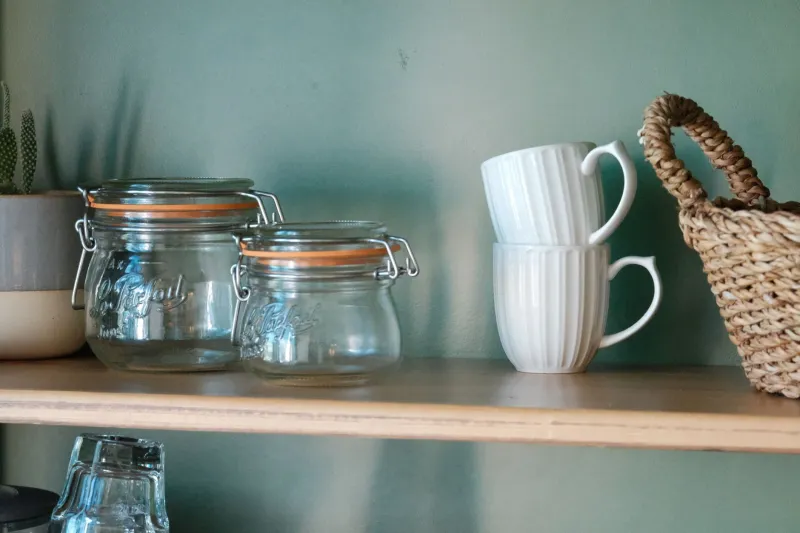
Most shared-home friction about CBD doesn't come from the CBD itself. It comes from surprise — the sense that something has appeared in the cupboard without warning. So the first, fairly unglamorous step is deciding where your bottle lives. A single dedicated spot, ideally one you've chosen rather than one you've grabbed, does a lot of quiet work.
A few practical thoughts for a British kitchen:
- Keep it out of the food-first zone. The shelf above the hob, the counter where bread and cereal congregate, the drawer full of cling film — these are shared spaces by habit. Better to use a smaller, less contested corner.
- Go high or go tucked away. An upper cupboard shelf or a small box at the back of a shelf works well. It keeps bottles clear of curious hands, spilled squash and the general traffic of a house in motion.
- Mind the heat. British kitchens swing from cold to warm more than people expect, especially in summer with the oven on. A cool, dark cupboard is kinder to most CBD oils than a sunny windowsill.
If you want a bit more detail on getting storage right, our piece on A Cool, Dark Corner covers the broader principles. Here, the point is simpler: a settled spot reads as considerate, and considerate is what keeps things calm.
The Small Box Principle
One idea that tends to work well in shared houses is what you might call the one-box approach. Rather than letting bottles, droppers, labels and receipts drift across two shelves and a drawer, everything lives in a single small container — a tin, a little basket, a shoebox with the lid kept on.
It isn't about secrecy. It's about tidiness, and tidiness does a surprising amount for everyone's nerves. It means your flatmate isn't moving your things to reach theirs. It means the shelf doesn't look like an advertisement. And it means that if someone does ask a question, you have one box to open rather than a scavenger hunt to conduct.
The same logic applies to labelling. If your bottle has a clear label from the brand, that's usually enough — no need to add extra notes. What helps far more is keeping the original packaging and any batch information together in that same box, so you can answer a question about what it is without squinting at a smudged dropper.
Building a Routine That Doesn't Perform
There's a temptation, when you're the only person doing something, to either over-explain it or conceal it entirely. Both are exhausting. The middle path is to build a routine so ordinary that it barely registers as an event.
Practical ways to keep it low-key:
- Pick a natural hinge. Straight after brushing your teeth, or while the kettle boils, or when you sit down with the evening's tea. A routine attached to something you already do is easier to keep and much less noticeable than one you announce.
- Don't narrate it. You don't owe anyone a running commentary. A brief, friendly "just part of my evening wind-down" covers more ground than a paragraph of explanation.
- Keep it in one moment of the day where possible. Morning and evening habits become invisible fastest. Midday, mid-commute, mid-conversation catches attention.
If you're still working out where CBD naturally slots into your day, our guide to midday habits and the kettle-and-clock approach both lean into this idea of anchoring without overthinking.
Answering the Kitchen-Table Question
Sooner or later someone will ask. It might be direct — "what's that?" — or it might arrive sideways, with a raised eyebrow at your box. The useful thing to remember is that most people asking are not hoping for a seminar. They're doing a quick sense-check and would like to be finished with it by the time the tea has brewed.
A few short answers that tend to land well:
- "It's CBD oil. I use a little in the evening. Happy to tell you more if you're curious, but it's not a big thing in my day."
- "Nothing dramatic — I'm just trying it as part of a wind-down routine. I've read up on it, and I'm keeping an eye on how I get on."
- "It's mine, it's stored in that box, and I'll keep it out of everyone's way."
The third one matters more than it sounds. A lot of household unease is really about space and boundaries rather than the product itself. Naming those boundaries out loud — this is my shelf, this is my box, I'll keep it tidy — tends to defuse a surprising amount.
What's worth avoiding is the debate-club reflex. If someone says they think it's a load of nonsense, you don't have to correct them over the cornflakes. "That's fair enough" is a complete sentence. You can always have the longer conversation later, over a cup of tea, when neither of you is holding a washing-up brush.
When Someone Would Rather You Didn't
Occasionally a flatmate or family member genuinely isn't comfortable, and that's worth taking seriously rather than arguing with. In a shared home, agreeing on a few small courtesies is usually enough:
- Keep the bottle in your own room rather than a communal cupboard, if the shared space is the sticking point.
- Agree that you'll never leave a dropper out on the counter.
- Make sure nobody else's things are stored alongside yours, so there's no confusion about what belongs to whom.
None of that requires you to give up your routine. It just acknowledges that shared kitchens run on small accommodations, and everyone makes them about something.
Worth a mention, too: if you take prescribed medication or have an ongoing health condition, keep that conversation with a pharmacist or your GP rather than the household. A housemate's opinion is not clinical advice, and the pharmacy counter is a genuinely sensible first stop.
The Unremarkable Shelf
The quiet goal here isn't secrecy, and it certainly isn't converting anyone. It's the point where your CBD stops being a topic and becomes just another item in a house full of items — the small tin next to the teabags, doing its job, drawing no crowd.
Start with one shelf. Keep one box. Say one short, friendly sentence when asked. Most households, given a bit of calm consistency, will file it away under "not my business" within a fortnight and go back to arguing about the washing-up.
And honestly, that's the nicest outcome available.