Paper Trail, Not Promises: A Beginner’s Tour of CBD Batch Testing

Photo by Photo by CBD Infos on Unsplash on Unsplash
There is a particular kind of quiet confidence that comes from holding a bottle of CBD oil and knowing exactly what paperwork sits behind it. Not a sweeping promise. Not a slogan in a serif font. Just a batch number, a laboratory name, and a page of results you can actually follow.
That page is usually called a certificate of analysis, or COA. It is not a magic wand, and it is not a substitute for the label. But for a curious beginner, it is one of the most grounding things you can ask a UK brand for. Think of it as the receipt behind the rhetoric.
What a COA is, and what it is not
A certificate of analysis is a laboratory’s record of what it found in a specific sample. For CBD products, it typically covers cannabinoid content — how much CBD, THC, CBG or other cannabinoids were detected — and, depending on the panel, tests for contaminants such as heavy metals, pesticides, residual solvents and microbiology.
What it is not: a certificate of quality in the grand, abstract sense. It does not prove the product will suit you, or that it will do anything in particular. It is a snapshot of a batch, tested at a point in time. That is precisely why it is useful. It narrows the gap between what a brand says and what a lab measured.
The batch number is the hinge
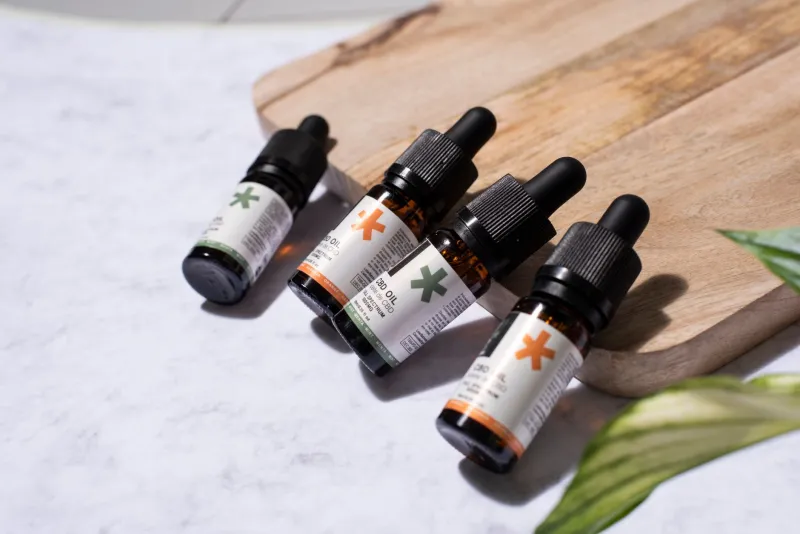
Every proper COA should relate to a batch code. This is usually a short string of letters and numbers printed on the bottle — sometimes on the base, sometimes near the best-before date, sometimes on the side of the carton. Without a batch number, a lab report is just a loose page. With one, it becomes a specific record of the liquid in your hand.
When you open a new bottle, take ten seconds to find the batch code and note it down. If you keep a CBD diary — even a line or two most days — add the batch code at the top of a new page. It is a small habit that makes later questions much easier to answer.
Reading the cannabinoid panel without a science degree
The cannabinoid section can look like a spreadsheet from another planet. You do not need to memorise it. Start with three things.
First, the CBD total. This is usually expressed in milligrams per millilitre (mg/ml) or as a percentage. Check whether the figure is per bottle or per drop, and whether it refers to CBD alone or total cannabinoids. A bottle labelled “10% CBD” should, in broad terms, contain around 1,000mg of CBD in a 10ml bottle — but the lab report is where you confirm what was actually measured in that batch.
Second, the THC figure. In the UK, THC is a controlled substance, and reputable products should show a very low or non-detectable result. You are not looking for a dramatic number here; you are looking for a clear one, with a limit of detection stated.
Third, the minor cannabinoids. CBG, CBN, CBC and others may appear in small amounts. Their presence is not a promise of anything. It is simply part of the batch’s fingerprint, and it helps you compare one product with another without relying on marketing language.
Contaminants: the unglamorous, important part
A cannabinoid panel tells you what is in the oil that the brand intended to put there. Contaminant testing tells you what should not be there. Look for sections covering heavy metals (lead, arsenic, cadmium, mercury), pesticides, residual solvents and microbiology.
You are not expected to interpret every threshold. What matters is that the tests were done, by a named laboratory, with results that sit within recognised limits. If a COA only shows cannabinoid content and nothing else, that is not necessarily a red flag — but it is a reason to ask a follow-up question.
Matching the paperwork to the bottle
A lab report is only useful if it matches your product. Check the product name, the batch code, the package size and the date of testing. A report from twelve months ago may still be the correct one for a long shelf-life product, but it should be clearly linked to the batch you bought.
If the brand publishes a COA on its website, look for a batch lookup tool or a clearly labelled PDF. If you cannot find one, email the brand and ask: “Could you send the certificate of analysis for batch [code]?” A calm, specific request is easier to answer than a general query about “quality”.
How to use it alongside the label
The label is the shopfront. The COA is the stockroom. You want both to agree.
If the label says 500mg CBD and the lab report for your batch says 487mg, that is not a scandal — small variations happen in any agricultural or manufactured product. If the numbers are wildly apart, or the batch code does not match, ask the brand to explain. You are not being difficult. You are being a careful consumer.
Use the label for practical things: serving suggestions, storage instructions, ingredients and allergens. Use the COA for verification: cannabinoid totals, contaminant testing and batch-specific detail. Neither document is complete on its own.
A quiet word on what testing cannot do
A clean lab report does not mean a product will suit you. CBD affects people differently, and the evidence base for many claims is still modest. Testing tells you about composition and safety checks; it does not tell you about your own experience. Start small, keep notes, and speak to a healthcare professional if you take prescribed medicines or have concerns.
In the UK, CBD products sit within a evolving regulatory picture, including novel food requirements for ingestible products. Lab testing is one part of that picture, not the whole frame. It is a tool for transparency — a way to see whether a brand is willing to show its workings.
The takeaway
Ask for the batch code. Ask for the certificate. Read the cannabinoid total, glance at the THC result, and check that contaminants were tested. Then put the paperwork down and go about your day.
Quiet consumer confidence is not about believing everything or doubting everything. It is about knowing where to look. A lab report is a good place to start — not because it promises a feeling, but because it shows you the numbers behind the bottle.